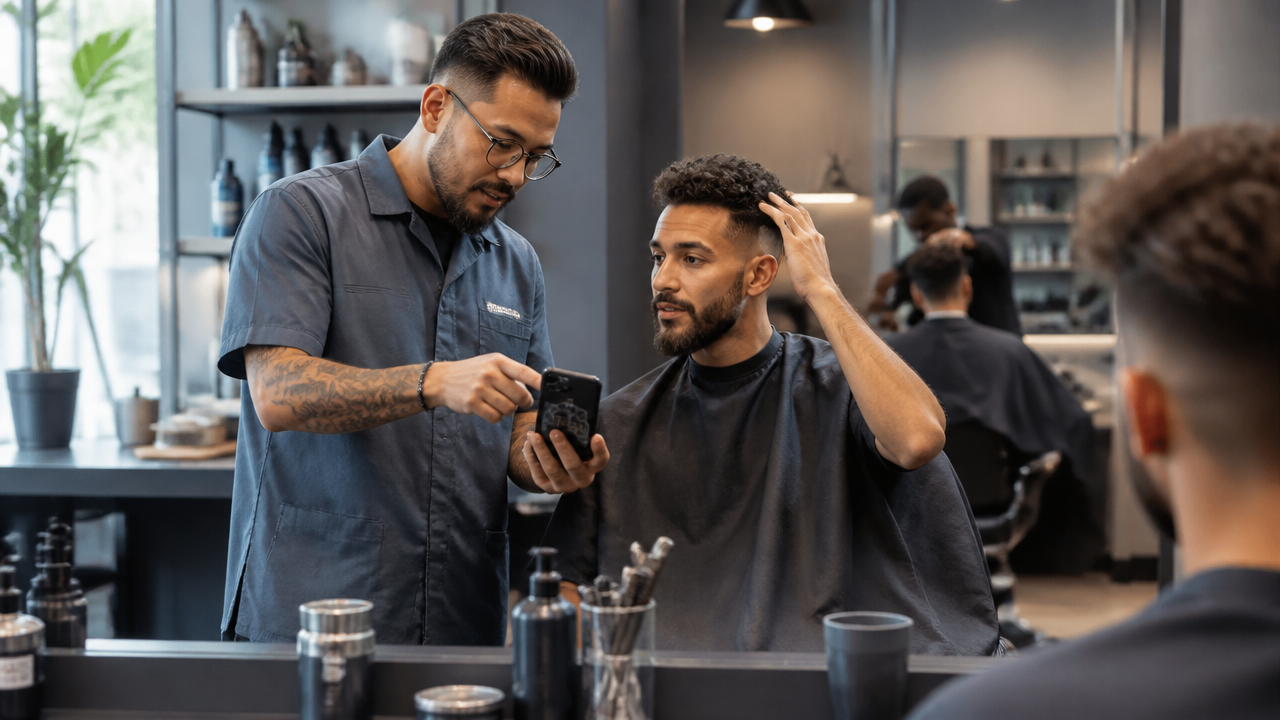
A great haircut should look right on you, not just on someone else’s feed. The same style can read sharp, soft, fuller, shorter, cleaner, or harder to manage depending on your hair texture, face shape, daily routine, and how much upkeep you actually want. At Underground One, that is why the consultation matters as much as the cut itself.
If you have ever saved a photo you loved and then felt unsure in the chair, the answer is not to abandon inspiration. It is to use inspiration better. The goal is to choose a style that fits your features, schedule, and confidence in everyday life.
Key takeaways before you choose your next cut
- The best haircut is personalized. A style should match your hair behavior, not just the picture.
- Texture changes everything. Straight, wavy, curly, and coily hair create very different shapes from the same idea.
- Face balance matters. Length, volume, and edge detail can highlight or soften features.
- Routine decides success. A cut that needs daily styling will not feel great if you want a two minute morning.
- Reference photos work best with context. Tell your barber what you like about the photo, not just that you want an exact copy.
Your haircut should fit your life, not just the trend
The right cut is the one you can live with comfortably between appointments. That means thinking beyond the first day and considering how your hair looks after a workout, in humid weather, on a busy morning, or after three weeks of growth.
Some people want structure and polish every day. Others want something they can finger style and leave alone. Neither goal is better. What matters is choosing a shape that supports your real schedule, because a cut that fights your routine often feels wrong even when the technique is good.
Ask yourself these four practical questions
- How much time do I want to spend styling each morning?
- Am I comfortable using products, a dryer, or a brush?
- How often am I willing to come in for a cleanup?
- Do I need my haircut to look good in both casual and professional settings?
When you answer those questions honestly, your barber can guide you toward something that looks intentional and stays manageable.
Why does the same cut look different on different people?
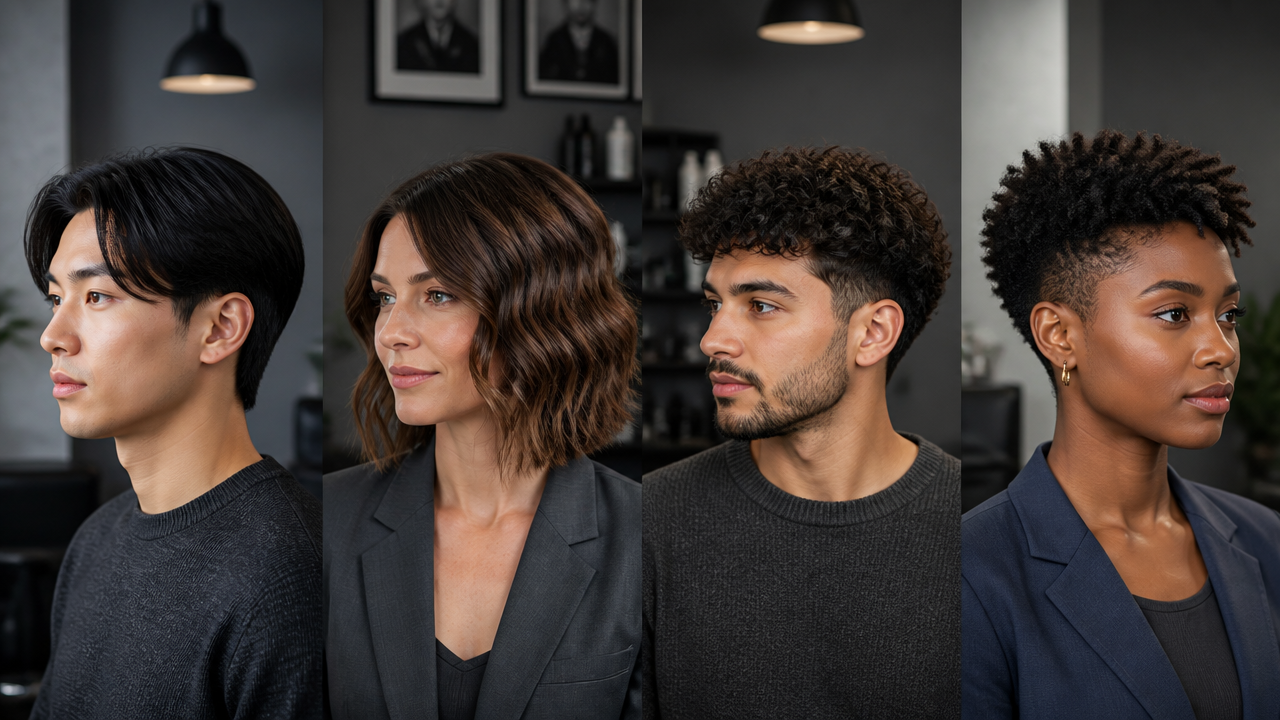
The same haircut looks different because hair does not behave the same from person to person. Texture, density, growth direction, and shrinkage change the silhouette, the volume, and the way the cut moves.
Straight hair tends to show lines clearly, so crops, fringes, and sharp tapers often read more precise. Wavy hair adds natural movement and softness, which can make the same cut look fuller. Curly and coily hair create lift, shape, and shrinkage, so length placement becomes more important than a photo alone can show.
| Hair texture | What it usually changes | What to discuss with your barber |
|---|---|---|
| Straight | Shows weight lines and blunt edges clearly | How much movement or softness you want |
| Wavy | Adds width and natural body | Where bulk should be removed or kept |
| Curly | Creates volume and spring | How short is too short once curls tighten |
| Coily | Builds shape, texture, and shrinkage | How to balance definition, outline, and maintenance |
This is why copying a celebrity or creator photo rarely works perfectly. A skilled barber translates the idea into your texture instead of forcing your hair into someone else’s pattern.
How should face shape and features influence your cut?
A haircut should create balance, not hide who you are. The right proportions can sharpen, soften, lengthen, or broaden the way your features read without looking overdesigned.
If your face is longer, too much height on top can exaggerate that length. If your face feels wider, extra width at the sides may make it appear broader. Strong cheekbones, a defined jaw, a high forehead, or a softer hairline can all affect where weight and detail should sit.
Your barber is looking at more than a label like round or oval. They are assessing feature balance, profile, crown shape, neckline, and where the eye naturally lands. That is why an in person consultation is so valuable. At Underground One, the goal is not to fit you into a template, but to shape the cut around what already works for you.
How much maintenance do you really want?
The easiest way to choose well is to be honest about upkeep. A low maintenance cut is not the same as a low quality cut. It simply means the shape still works when you are not doing much to it.
If you want something easy, ask for a style that grows out cleanly, needs minimal product, and does not lose its shape after two weeks. If you enjoy styling, you can choose more texture, more direction, or stronger contrast, knowing that the look may need more effort and more frequent refreshes.
Low, medium, and high upkeep usually look like this
- Low upkeep: soft taper, textured crop, longer buzz variations, shapes that air dry well.
- Medium upkeep: classic side part, short curls with shape, layered top with controlled sides.
- High upkeep: skin fades, sharp line work, sculpted pompadours, highly defined styles that need daily styling.
There is no wrong answer. The smart choice is the one you can maintain without frustration.
How do you bring reference photos without asking for a copy?
Reference photos are helpful when you use them as a conversation tool. Instead of saying, “I want this exactly,” explain what you like about it and what concerns you about your own hair.
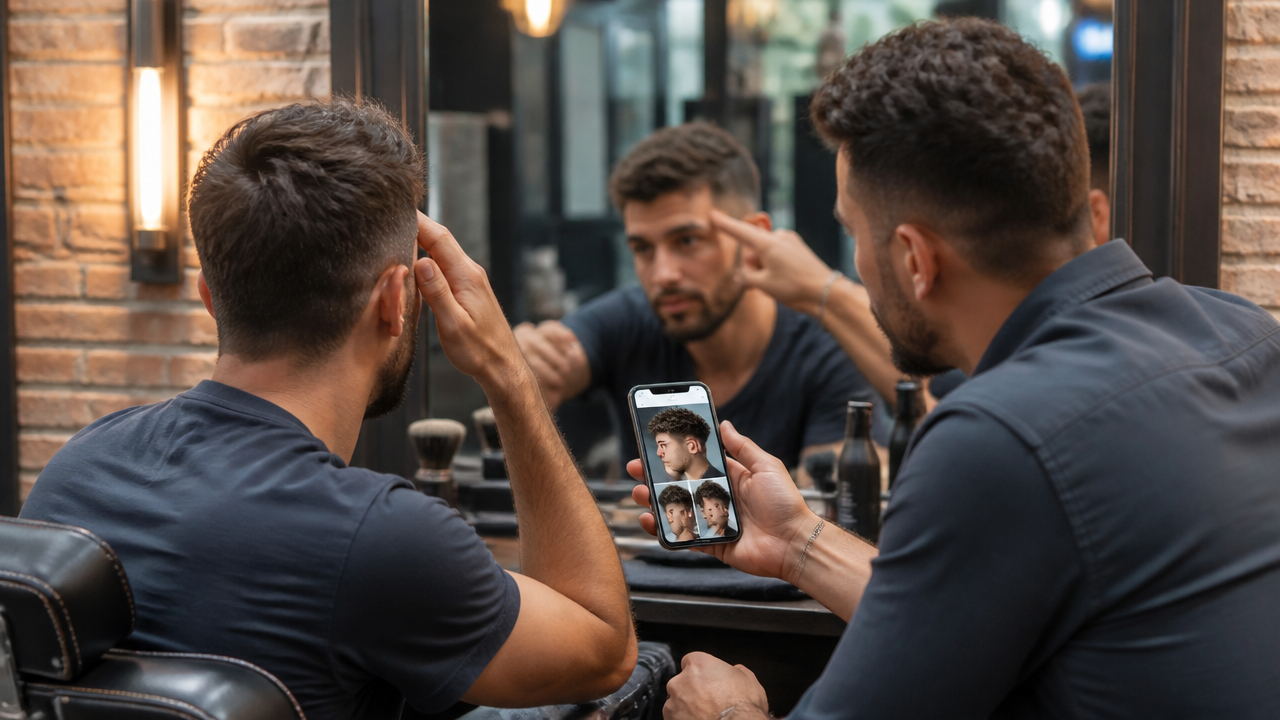
That gives your barber real information to work with. You might like the clean neckline, the soft fringe, the volume on top, the natural finish, or how sharp the sides feel. Those details are much more useful than the photo by itself.
Bring photos like a pro
- Save 2 to 4 images, not 20.
- Choose photos with hair texture similar to yours when possible.
- Point out specific parts you like, such as length, shape, fade level, or fringe.
- Mention what you do not want, especially if you had a bad experience before.
- Be clear about your morning routine and maintenance limit.
This approach helps your barber design a realistic version that feels personal instead of copied.
What happens in a professional barbershop consultation?
A strong consultation turns vague inspiration into a clear plan. Your barber should ask about your routine, examine your hair pattern, discuss maintenance, and explain what will translate well and what should be adjusted.
This is also the moment to talk about cowlicks, thinning areas, beard balance, hairline preferences, and how often you return for touch ups. A professional will tell you when a photo is achievable, when it needs modification, and which version will suit you better long term.
That expertise is where a quality barbershop earns trust. At Underground One, the consultation is part of the service experience because confidence usually starts before the first clipper pass.
A simple decision guide for choosing your next haircut
If you want a cut that looks good outside the shop, make the decision through function first, then style. That keeps the result grounded in your real habits while still giving you room for personality.
- Start with your texture: straight, wavy, curly, or coily.
- Decide your effort level: wash and go, a few minutes of styling, or a fully styled look.
- Choose your upkeep rhythm: every 2 to 3 weeks, monthly, or longer grow out.
- Consider feature balance: more height, less width, softer edges, or cleaner structure.
- Use photos to show direction, then let your barber tailor the final shape.
That process leads to better results than chasing the latest post online. A great cut should still feel like you, just sharper, easier, and more intentional.
Frequently asked questions
What is a haircut consultation?
A haircut consultation is a short conversation before the service where you and your barber define a goal that fits your hair, features, routine, and maintenance comfort. Instead of chasing an exact copy of a photo, the consultation turns inspiration into a version that works for your real life.
How long is a hair consultation usually?
Most consultations take about 5 to 10 minutes, though first visits can take longer. A good barber uses that time to assess hair texture, growth patterns, head shape, styling habits, and how often you are willing to come back for cleanup appointments.
Do I need to wash my hair before a hair consultation?
Yes, arriving with clean or at least product free hair helps your barber see your natural texture, density, and growth pattern more clearly. If you cannot wash it beforehand, tell them what products you used so they can better judge how your hair behaves day to day.
What should I tell my barber for a buzz cut?
Tell your barber how short you want it, how you want the hairline handled, and how much scalp you are comfortable showing. It also helps to explain whether you want a sharp, high contrast buzz cut or a softer version that grows out more gradually.
How do I choose a haircut that will work in real life?
Choose a cut that matches your texture, face shape, styling time, and upkeep tolerance. The best style is the one you can actually maintain, whether that means wash and go simplicity, a defined daily look, or a shape that still looks good between appointments.